

Telegram is a cloud-based messaging and communication application that allows users to send messages, photos, videos, documents, and other types of files across multiple devices.
Telegram Desktop provides access to Telegram conversations from Windows computers and supports individual chats, groups, channels, voice calls, video calls, file sharing, and other communication features. Messages stored in Telegram's cloud can be synchronized across supported devices.
What's New
Recent Telegram updates introduce new communication, customization, privacy, and content-sharing features, along with improvements to the desktop experience.
Newer releases may include enhanced stories, profile customization, improved group calls, bot features, AI-related tools, passkeys, and other interface and performance improvements.
Key Features
-
Instant Messaging: Send text messages, voice messages, photos, videos, documents, and other files.
-
Cloud Synchronization: Access cloud-based chats and media across multiple supported devices.
-
Groups: Create and participate in large group conversations and communities.
-
Channels: Follow channels and publish content to large audiences.
-
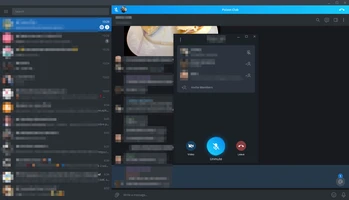
Voice and Video Calls: Make voice and video calls with other users.
-
Group Voice Chats: Participate in live voice conversations within supported groups.
-
File Sharing: Share documents, archives, media, and other supported file types.
-
Username Support: Find and contact users without necessarily sharing a phone number.
-
Privacy Features: Includes secret chats, disappearing messages, passcode protection, and two-step verification.
-
Stories: Create and view short-lived visual content.
-
Bots: Interact with automated accounts and use bots for various tasks.
-
Customization: Configure notifications, themes, chat appearance, and other settings.
User Interface
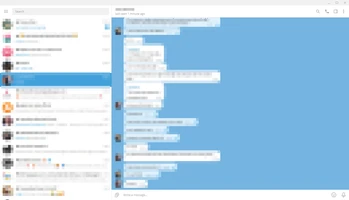
Telegram Desktop uses a clean interface with the chat list on the left and the active conversation on the main panel.
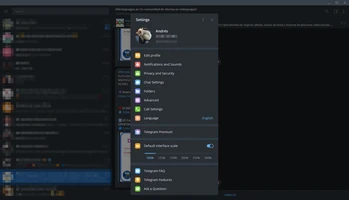
Users can access contacts, groups, channels, settings, saved messages, and other features from the main navigation area. The desktop interface is designed to provide a similar experience across different supported platforms.
Installation and Setup
-
Download the Telegram Desktop installer.
-
Run the installer and complete the setup.
-
Launch Telegram Desktop.
-
Sign in using an existing Telegram account or create a new account.
-
Complete the required verification process.
-
Your available cloud-based chats will appear after signing in.
How to Use
-
Launch Telegram Desktop and sign in.
-
Select a contact or conversation from the chat list.
-
Enter a message or attach photos, videos, documents, or other files.
-
Use voice or video calling when supported.
-
Join or create groups and channels as needed.
-
Adjust notifications, privacy, appearance, and security settings.
-
Use Telegram on other supported devices to access synchronized cloud chats.
FAQ
Is Telegram free to use?
Yes. Telegram offers free messaging, calling, file sharing, groups, and channels. Optional premium features are available through Telegram Premium.
Can I use Telegram on my PC without a phone?
Telegram accounts require a phone number for registration. Once the account is set up, Telegram Desktop can be used for messaging without keeping the mobile app open.
Are Telegram messages synchronized across devices?
Yes. Regular cloud-based chats can be synchronized across supported devices.
Does Telegram support voice and video calls?
Yes. Telegram supports one-to-one voice and video calls as well as group voice and video communication features.
What is the difference between regular chats and Secret Chats?
Regular chats are stored using Telegram's cloud-based system and can be synchronized across devices. Secret Chats use end-to-end encryption and are designed for more private conversations, but they are tied to the devices where they were created.
Can I send files through Telegram?
Yes. Telegram supports sharing documents, photos, videos, archives, and other file types, subject to the applicable file-size limits.
Does Telegram have a desktop version?
Yes. Telegram Desktop is available for Windows, macOS, and Linux.
Alternatives
WhatsApp: A widely used messaging platform supporting text, voice, video, groups, and file sharing.
Signal: A privacy-focused messaging application with strong end-to-end encryption for private communication.
Discord: A community-oriented communication platform focused on text, voice, video, and online communities.
Slack: A workplace communication platform designed for teams, channels, file sharing, and collaboration.
Pricing
Telegram is free to download and use for its core messaging and communication features.
Telegram Premium is an optional subscription that provides additional features and higher limits. Pricing varies by region and subscription method.
System Requirements
-
Operating System: Windows 10 or later recommended
-
Processor: Compatible 64-bit processor
-
RAM: 1 GB or more recommended
-
Storage: At least 100 MB of available disk space
-
Internet: An active Internet connection is required
-
Account: A valid phone number is required for account registration
Actual requirements may vary depending on the Telegram Desktop version.
Pros
-
Fast messaging and synchronization
-
Supports multiple devices
-
Large groups and channels
-
Voice and video calls
-
Extensive file-sharing capabilities
-
Desktop, mobile, and web versions
-
Large selection of bots and communication features
-
Optional privacy and security tools
Cons
-
Requires a phone number for account registration
-
Some advanced features require Telegram Premium
-
The large number of features can be overwhelming for new users
-
Regular cloud chats are not end-to-end encrypted by default
Conclusion
Telegram Desktop provides a comprehensive messaging platform for Windows users who want access to their Telegram conversations from a computer. It combines messaging, file sharing, groups, channels, voice and video calls, and cross-device synchronization in a single application.
Its broad feature set makes it suitable for personal communication, online communities, and group collaboration, while optional privacy tools and Telegram Premium provide additional functionality for users who need them.