


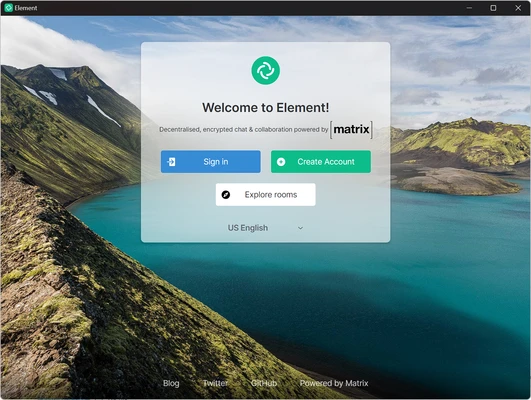
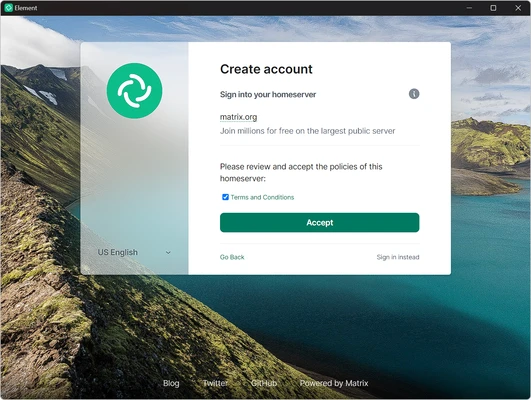

Element (formerly Riot) for Mac is an open-source, decentralized communication platform built on the Matrix protocol, designed for secure messaging, voice, and video collaboration across multiple networks.
It enables users and teams to communicate seamlessly across different services such as IRC, Slack, and Gitter through bridging, while maintaining full control over their own data and servers.
Key Features
- Decentralized communication using the Matrix protocol
- End-to-end encrypted messaging with cross-signing support
- Cross-platform bridges to Slack, IRC, Gitter, and other networks
- Secure voice and video calling
- Self-hosting option for full data control
- Open-source and community-driven development
- Group chats, public rooms, and private conversations
- File sharing and media support
- Multi-device synchronization
- Customizable interface and themes
Why Choose Element?
Element is designed for users and organizations that prioritize privacy, decentralization, and interoperability. Unlike centralized chat platforms, it allows full ownership of communication data while still supporting integration with other popular messaging ecosystems.
Best For
- Developers and technical teams
- Privacy-focused users
- Open-source communities
- Distributed or remote teams
- Organizations needing self-hosted communication
Pros
- Strong end-to-end encryption
- Fully decentralized architecture
- Supports bridging multiple chat platforms
- Open-source and extensible
- Self-hosting capability
Cons
- Setup can be complex for beginners
- Interface may feel less polished than mainstream apps
- Performance depends on server configuration
- Learning curve for Matrix ecosystem
System Requirements
- macOS 10.12 or later
- 4 GB RAM minimum
- Stable internet connection
- Intel or Apple Silicon Mac (native or Rosetta)
Conclusion
Element for Mac is a powerful decentralized communication tool built for secure and flexible collaboration. It is best suited for technical users and organizations that need full control over their communication infrastructure while still maintaining interoperability with other messaging platforms.