

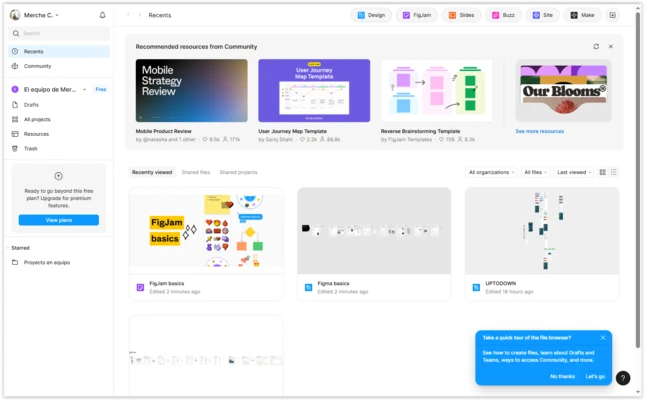
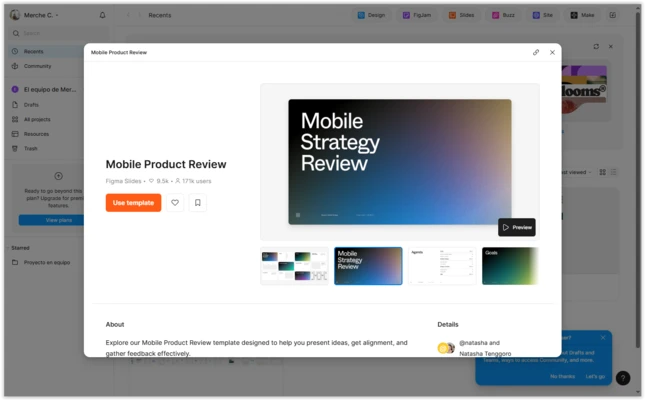
Figma is a cloud-based design and prototyping tool that allows designers, developers, and other team members to work together in real time. It is widely used for creating user interfaces, designing user experiences, building design systems, and developing interactive prototypes. Its browser-based workflow makes it easy to access projects without requiring complex local installations.
Powerful and Flexible Vector Design for Any Project
Figma provides a versatile vector design system for creating user interfaces, illustrations, icons, and marketing graphics. Its tools include shapes, drawing controls, gradients, and typography options, while the layer system helps organize complex designs. Reusable components, shared styles, and design libraries also make it easier to maintain consistency across projects and apply changes efficiently.
Real-Time Collaboration and Seamless Workflow
One of Figma's main strengths is real-time collaboration. Multiple users can work on the same design file simultaneously, see changes as they happen, and communicate through comments and annotations. Projects are saved in the cloud, reducing the need to exchange files manually or manage multiple versions. This makes Figma particularly useful for teams working remotely or across different locations.
Plugins, Widgets, and Extensions
Figma supports a wide range of community-developed plugins and widgets that extend its design capabilities. These add-ons can help with content generation, accessibility checks, asset management, and integration with development tools. They also automate repetitive tasks and make it easier to adapt the design workflow to the needs of individual users and teams.